|
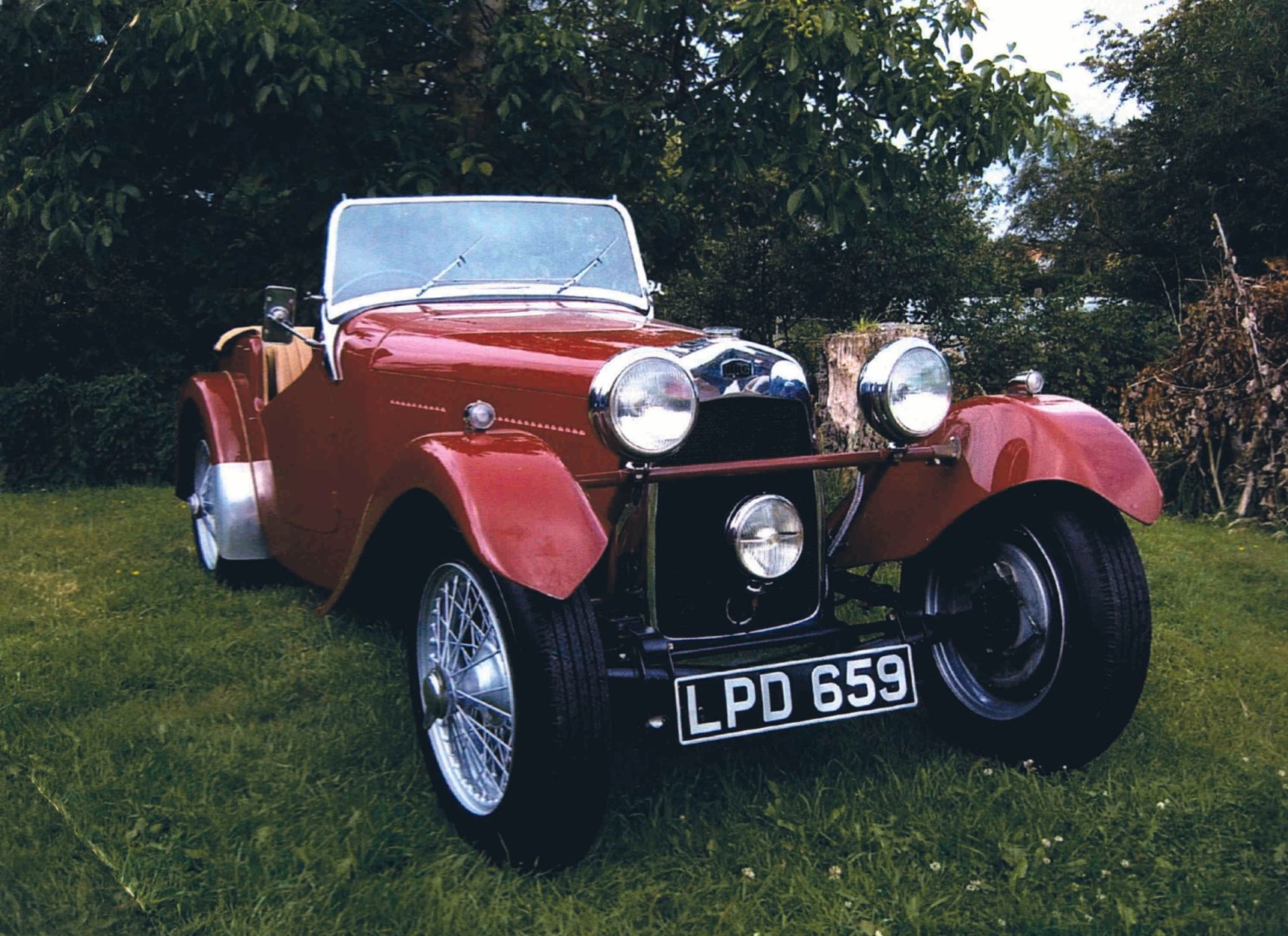
The “1½ Litre”
Built 1935-1938. The prototype was designed and built in 1935. It was powered by a 1500cc Meadows 4ED pushrod engine and used a 4-speed Moss gearbox. The first 16 cars had a narrower chassis. All later chassis were 2 inches wider. All production bodies were built by Alban Croft of South Croydon. Factory brochure HERE.
This model was used extensively in motor sport pre-war with great success. Its most notable victory was a class win at Le Mans in 1939. However, they were not simply excellent race cars but also successful in rallies (a class victory in the 1939 RAC Rally) and in trials.
Number built: 25
|
|
 |
|
|
|
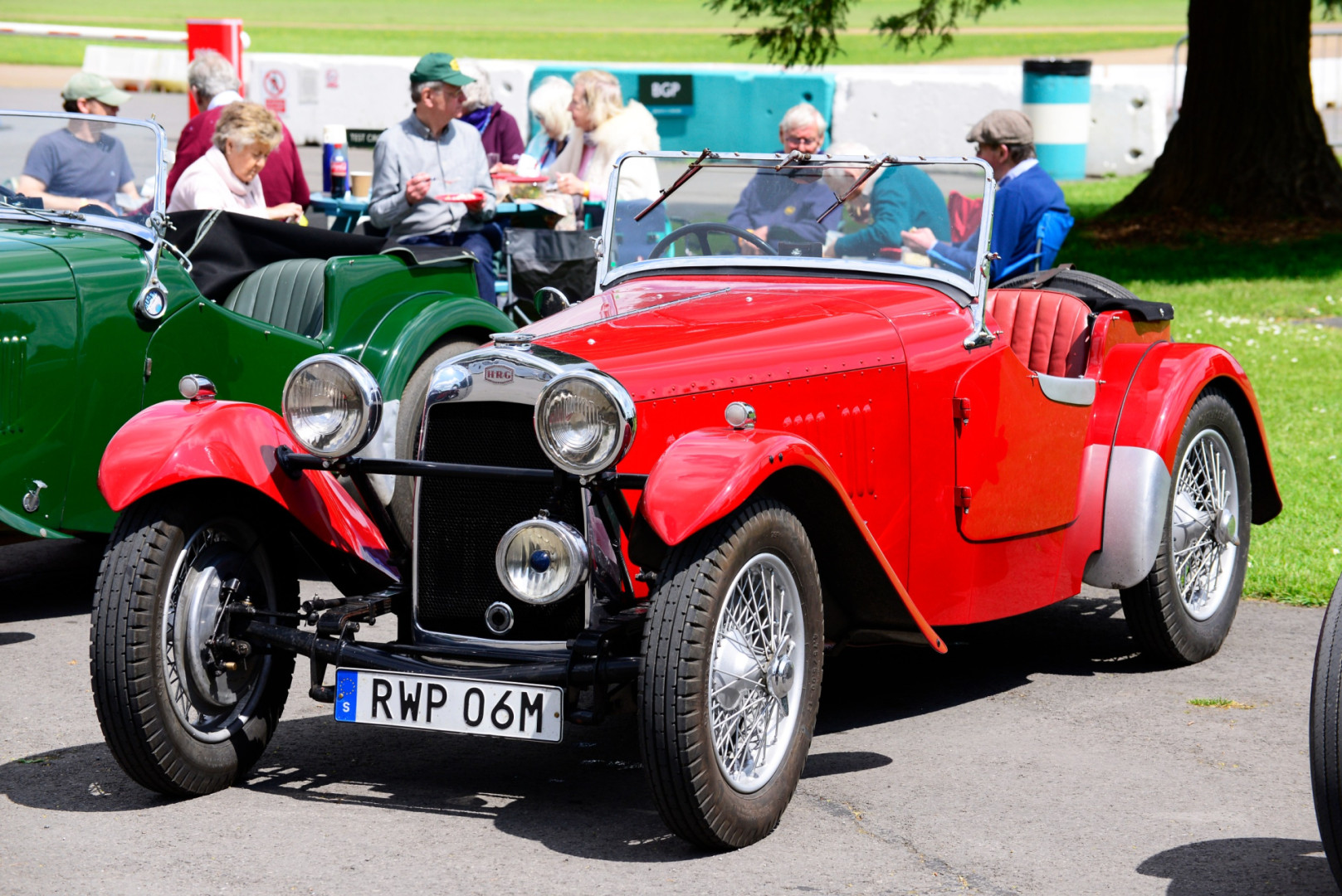
The “1500”
Built from 1939 to 1956, this is the most common model. The 1½ Litre model evolved into the “1500” model. It had the same wheelbase and used the wide chassis. All 1500s, except the last 12 produced, used the Singer 12 HP engine, heavily modified by HRG, and a Singer 12 gearbox. The last 12 cars produced used the Singer SM 1500cc engine, again with some modifications. Production bodies were made by REALL, Automarine and St. Leonard’s Engineering Co.. Several cars were sold in chassis form and bodied to their owner’s designs. Factory brochure HERE.
This model was raced by owners extensively post-war. Highlights on the track were class wins at Le Mans and Spa in 1949. In rallies, this model racked up class wins in the Alpine Rally (1951) and twice in the RAC Rally (1951 and 1953).
Number built: 112
|
|
The “1100”
The prototype was built in 1938 and the model continued in production until 1949. This was a smaller and lighter model than the “1500”. It used a slightly shorter version of the “1500” chassis and the engine was based on either the 9hp or 10hp 1100cc Singer SOHC engine and gearbox. Bodies were initially built by REALL and later by Automarine.
Factory brochure HERE.
Number built: 50
|
|
|
|
|
|
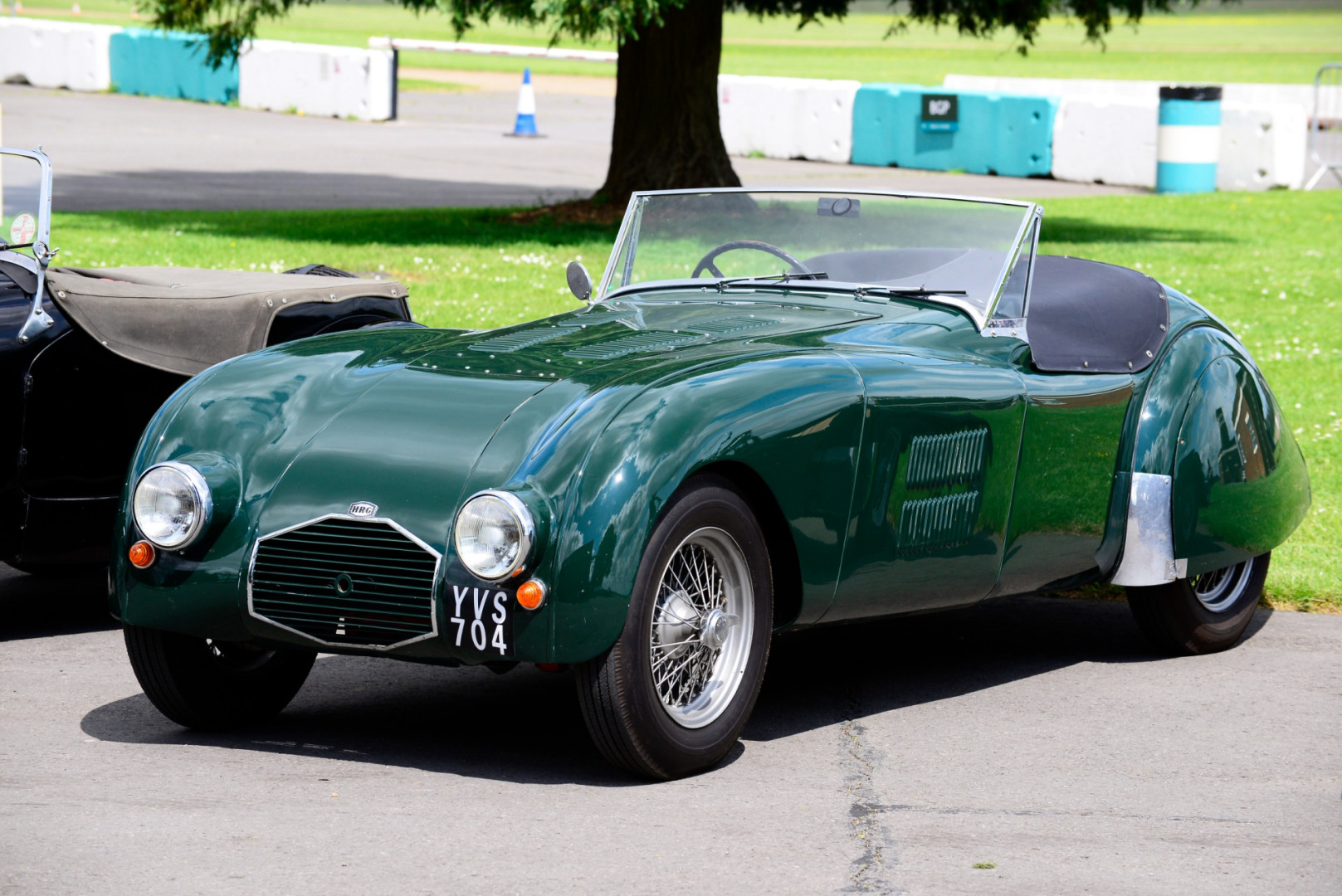
The “Aerodynamic”
The prototype was built in 1940 but production did not begin until 1946 and ceased in 1949. All Aerodynamics had the same drive train as the “1500” as well as the same basic chassis. Sub-frames were bolted to the chassis to take the new streamlined body and some components, notably the spare wheel and fuel tank, were relocated. Bodies were produced by Fox & Nicholl. Factory brochure HERE.
Despite the additional weight compared with the “1500”, this model was raced and rallied in period. Perhaps its most notable success was second in class at Spa in 1949 using a coupe body – and pioneering car-to-pit radio communication. In rallying, an Aerodynamic won its class in the Lisbon Rally of 1949.
The weight penalty and problems mating the enveloping body to a flexible chassis meant that many Aerodynamics were converted to “1500”s.
Number built: 45 |
|
|
|