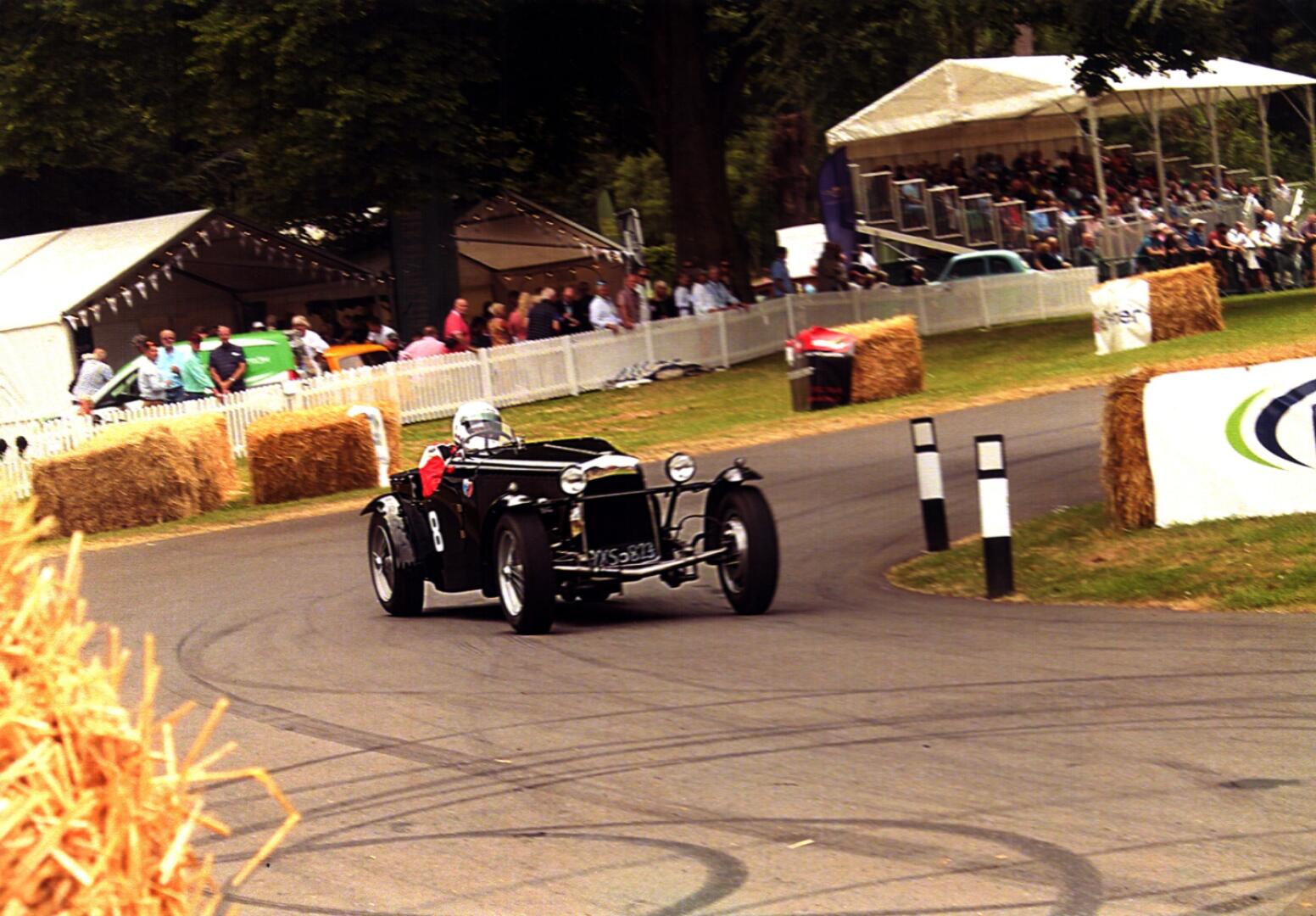
These are drivers cars!
|
“threefold performance..without modifications the HRG will serve three distinct purposes – trials and competition work; road and track racing; and comfortable, fast touring” - 1936 H.R.G brochure
“The HRG is an incredible experience – it informs you about everything – has a driving style on a par with a ‘50s – even an early ‘60s – single seater” - 2015 Classic Car
“Eight successive 700 mile plus Flying Scotsman rallies and three Alpine Trials – no breakdowns and perfect for fast roads, hairpin climbs, twisty lanes and even gravel – so much fun” - 2025 rally competitor
“perfect hill climb and speed event car, handling and behaviour outstanding” - 2025 hill climb and speed competitor |
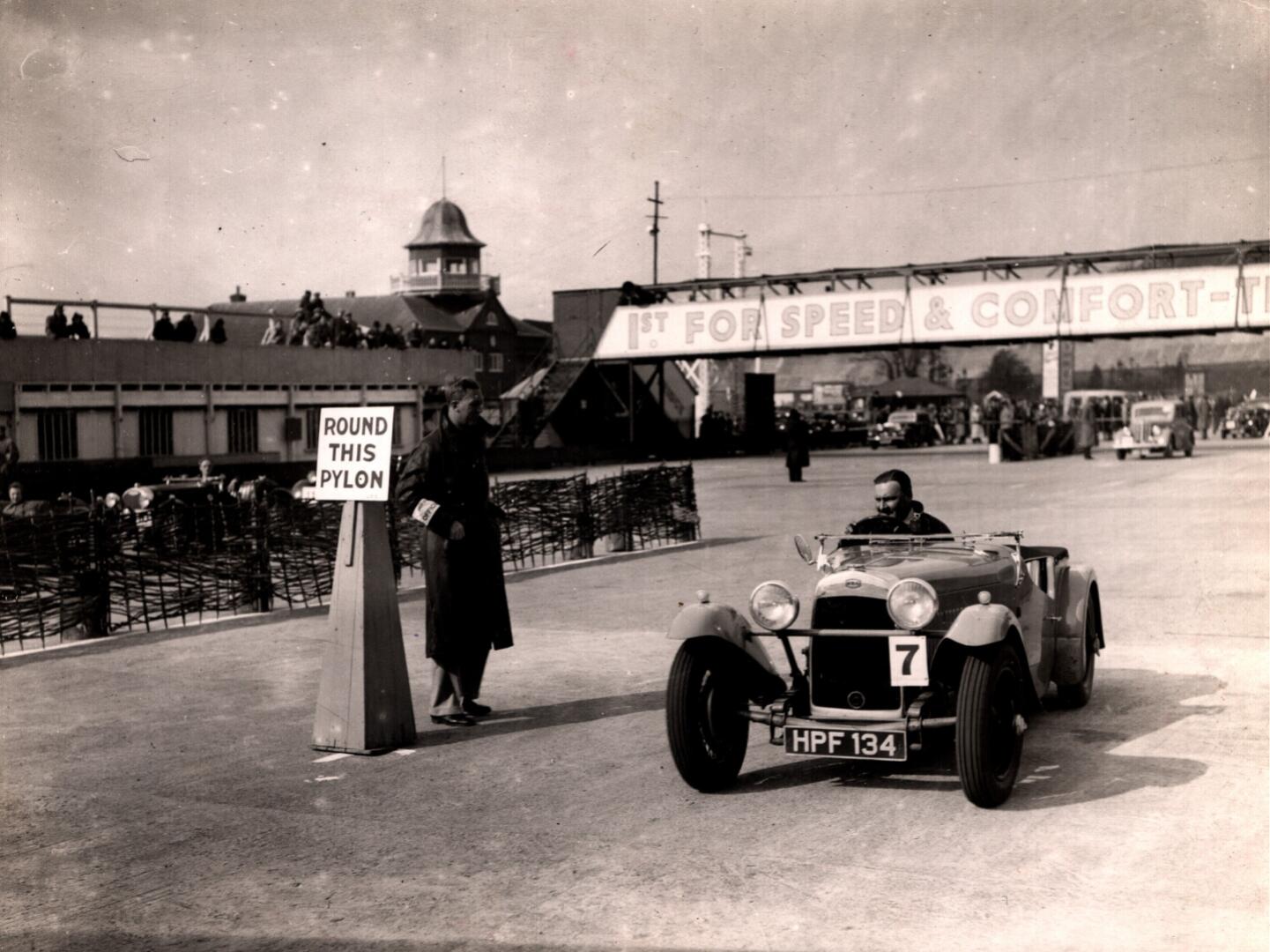
HRG produced a small number of world beating, multi-purpose, sports cars. 36 were made from 1935 to 1941 and a further 205 made from 1946 to 1956. They were road cars but they were also class winners in road races such as Le Mans and Spa and in rallies such as the RAC and the Alpine - and all this despite never having run a factory team! For competition results in period see RESULTS. These extensive competition successes are being repeated in many historic motorsport events today - see CONTEMPORARY RESULTS.
Four principal, closely related models were produced - the 1½ Litre, the 1500, the 1100 and the Aerodynamic - for details see MODELS and SPECIFICATIONS
The driving experience of a well-prepared HRG soon makes it clear why they were so successful on race tracks and in rallies especially in the immediate post-war period. Barrie “Whizzo” Williams, a very accomplished racing driver, in many different types of car, and someone who has road tested many historic sports and racing cars, described a post-war HRG 1500 on a test for Classic Cars in 2015 as follows:-
|
“That’s a real sports car! Everything is perfectly placed – the driver’s seat, the steering wheel – it’s all so intuitive and it responds with such precision. You can drive it instinctively and it will go where you point it”. “There is a lot of steering kick-back, but that’s a good thing. You feel every bump, but in a nice way and a way racing drivers appreciate. The car is letting you know what’s going on in a manner I’ve only experienced before in a single seater”. “The HRG is an incredible experience. The HRG is my favourite (on this road test comparison) in every way. It’s not just the way it informs you about everything, it’s the way it looks and the associations it draws. It taps into the aesthetics of pre-war racing but has a driving style on a par with a 50s – even an early 60s – single seater.”
|
To read more of Whizzo's comments click HERE.
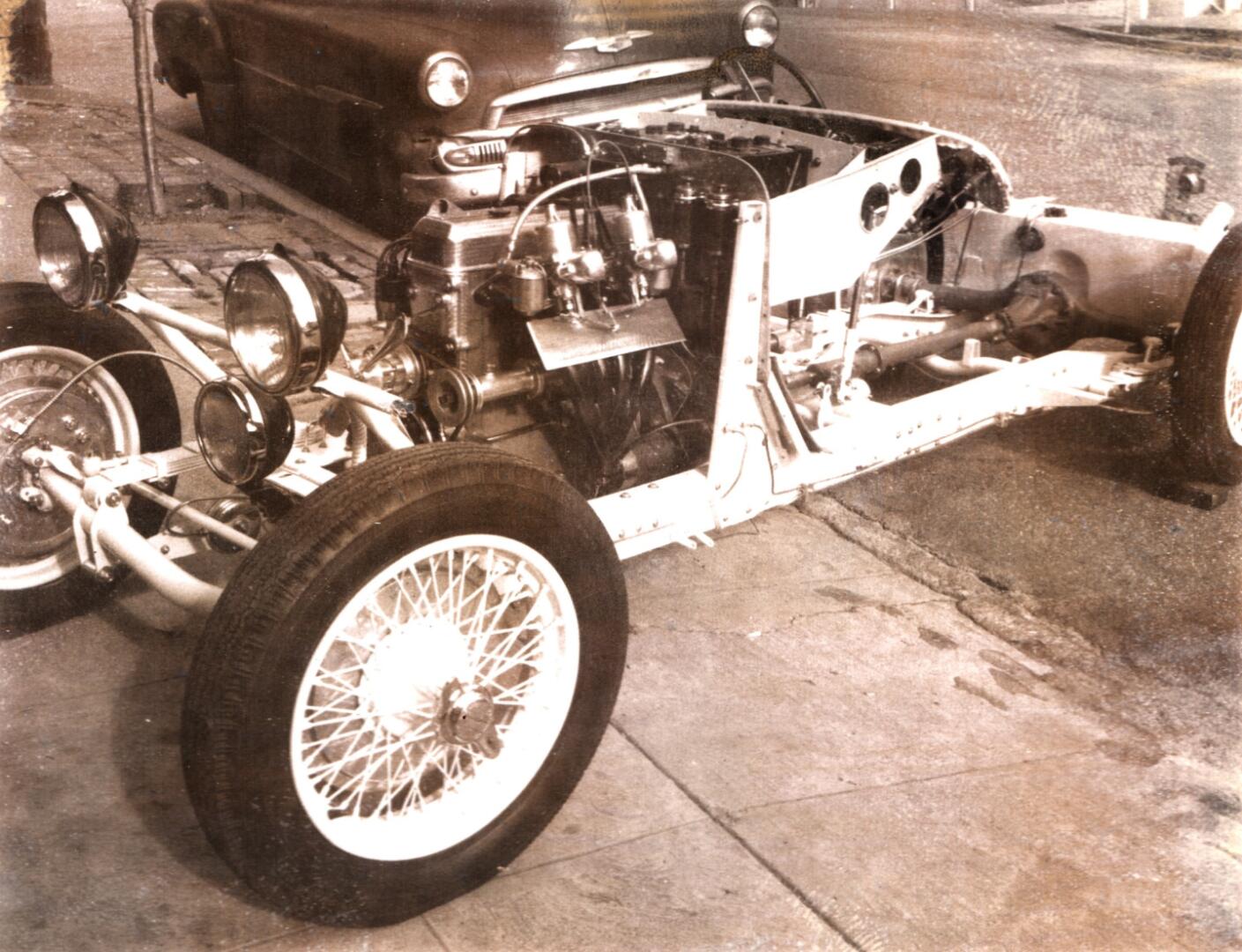
The HRG was a purpose-built sports car unlike many of its peers which were often adapted saloon cars. Like all true sports cars, the HRG gets its performance from low overall weight using high quality light materials, good weight distribution, fine road holding and adequate engine power. Their engines were specially prepared to obtain a reliable power output on a par with their peers. They were noted in road tests for naturally good acceleration, road holding and braking. These ingredients came from the enthusiastic team of founders, headed by Ron Godfrey, who clearly knew what they were doing.
|
HRGs tend not to understeer
The HRG’s particular front axle location, and general rearward weight bias helps with this. For the driver, the car turns into corners efficiently and power can be applied early and confidently. The relatively “neutral balance” of the car can be fine-tuned to the driver’s tastes by measured adjustments in its shock absorber settings and tyre pressures.
|
 |
|
|
|
||
 |
HRGs steer accurately
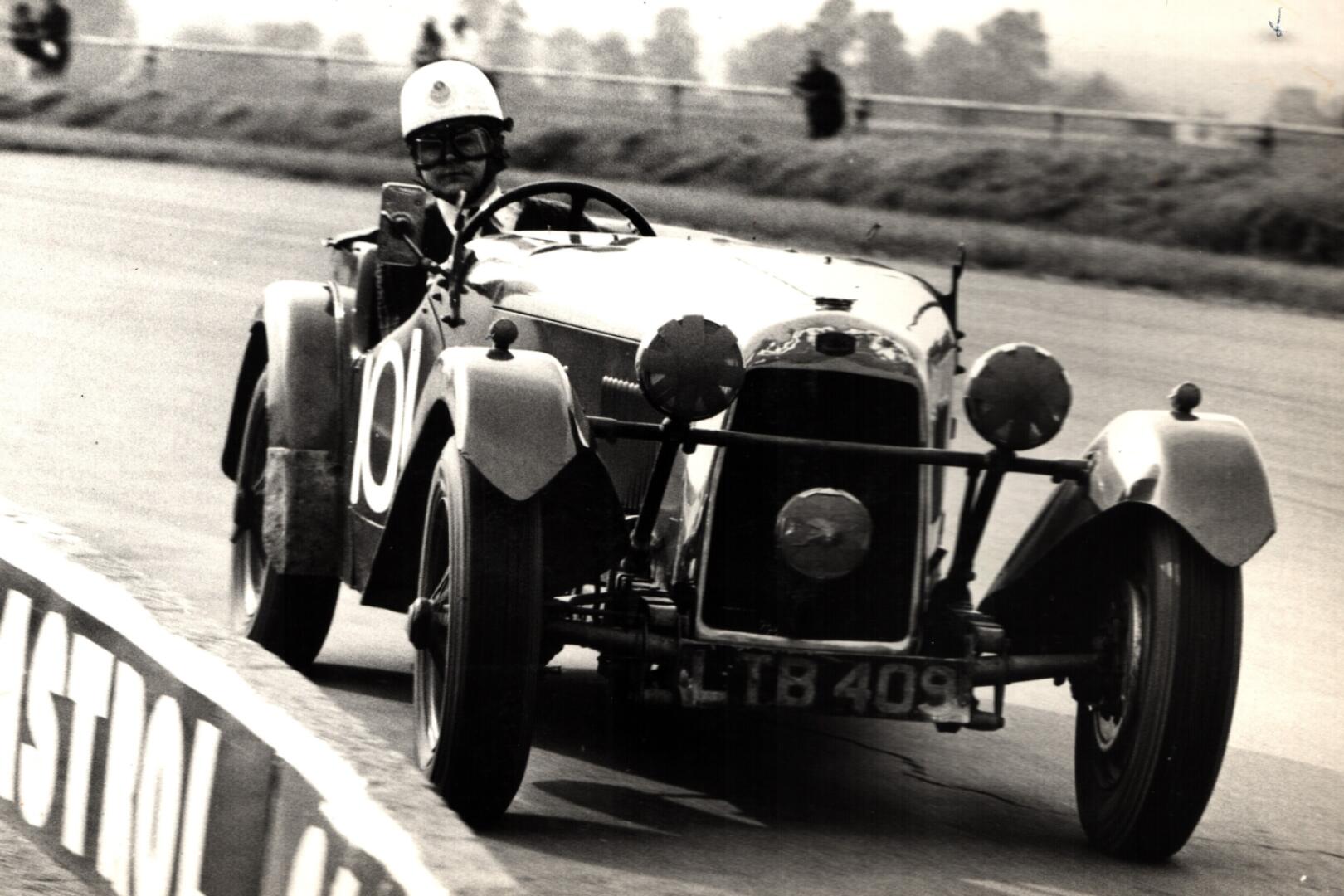
HRGs have particularly good steering and this was praised in period. This comes from using a high-quality steering box, mounting it well to the chassis, and employing a fore-and-aft drag link. In addition, care was taken in determining the steering geometry to ensure quick response and feedback. |
|
|
|
||
|
HRGs have inherently superior handling
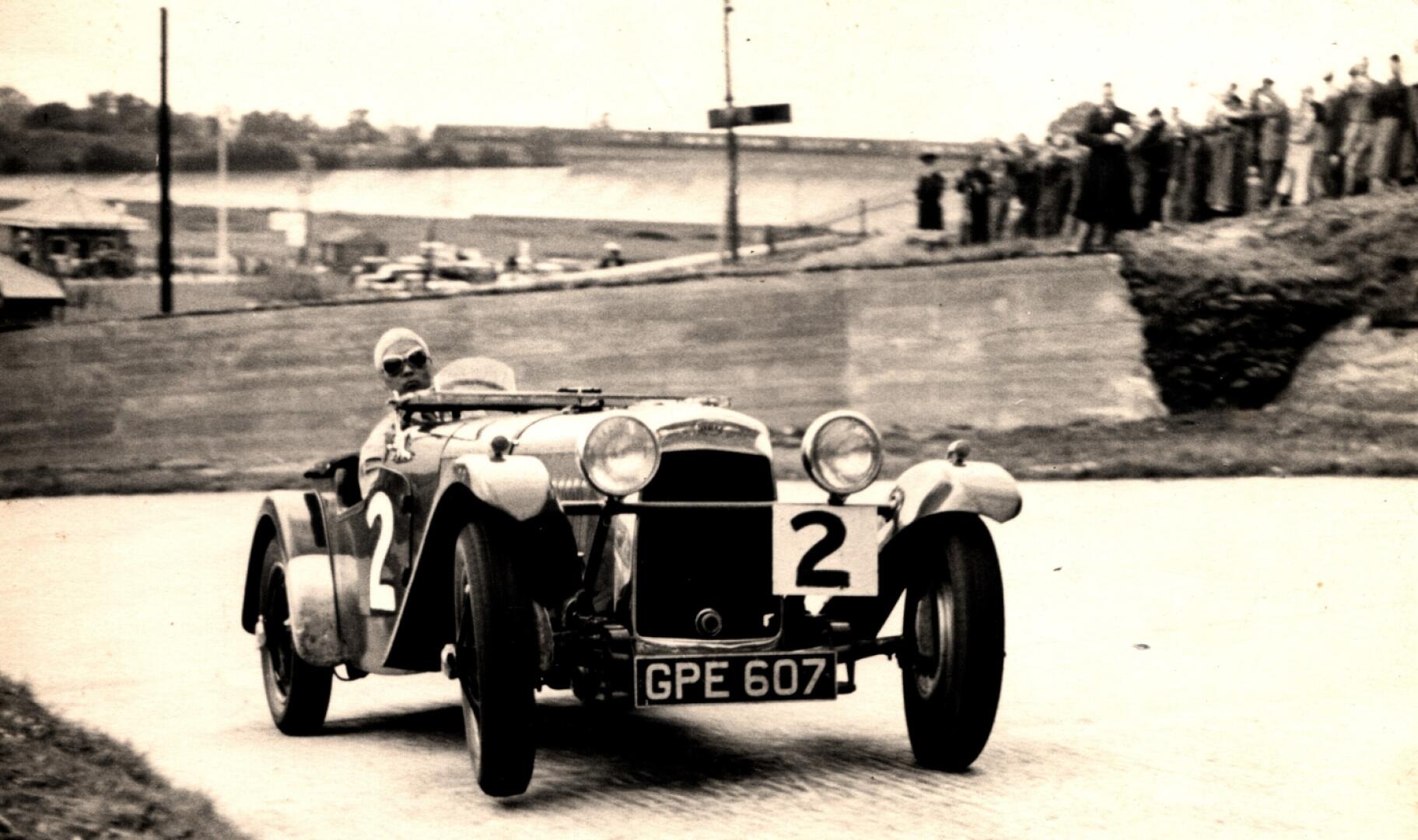
In addition to the steering characteristics, the superior handling performance comes from the light, yet rigid, chassis, and having reduced un-sprung weight. HRG used stiffer springs than its peers, primarily to reduce roll, and also made their own, more efficient, shock absorbers which all added to the handling performance. |
 |
|
|
|
||
 |
HRGs stop well
Like a lot of its peers, HRGs have mechanically operated drum brakes (the factory also developed a hydraulic conversion in the ‘50’s) but, importantly, all of the braking system was their own design. That combined with well executed engineering made an excellent braking system, often far more efficient than similar sized cars. With the HRG system, adjustment is also very quick and easy so that the system can be kept at peak performance .
|
|
|
|
||
|
HRGs in historic motorsport today
Today, many other makes of historic car achieve their motorsport performance through continual development and, often, significant changes to their original design. In contrast, it is still perfectly possible to be competitive today in an HRG using original specification chassis, brakes, axle, transmission, engine and standard bodywork. HRG cars were also originally designed to be competitive in a wide range of different motorsport disciplines, from off-road trials to speed events and racing. Whilst some of those disciplines have become more specific today, often demanding a specially prepared car, it is still possible to compete in them all in a well-prepared HRG and also drive to and from the events on the road. This was one of the aims of their designers and upholds their claim of "The Sportsman's Ideal". To see eligibility for historic events click ELIGIBILITY |
|